
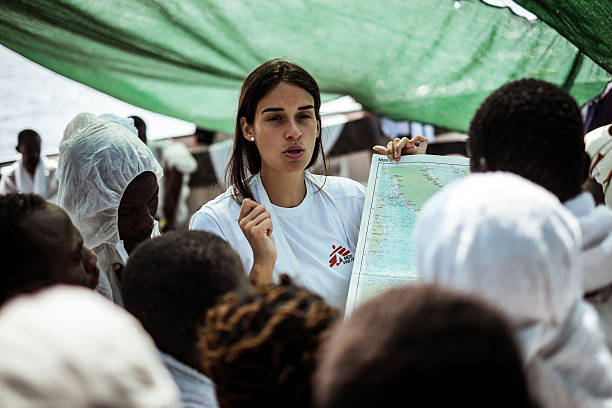
Italy has developed a distinctive professional figure that has no exact equivalent in many other European countries: the cultural mediator (mediatore culturale). In the healthcare context, a cultural mediator sanitario goes beyond linguistic interpretation to address the deeper cultural, social, and psychological dimensions of the patient–provider relationship in multicultural settings.
Originating in the 1990s as Italy began receiving large-scale immigration, the role was developed by NGOs, cooperatives, and forward-thinking regional health authorities as a response to the inadequacy of translation alone in meeting the complex needs of immigrant patients. Today, cultural mediators work across Italy’s major cities and in many rural areas, employed by hospitals, local health authorities (ASL — Aziende Sanitarie Locali), social services, schools, and prisons.
The Distinction Between Interpretation and Cultural Mediation
While a medical interpreter focuses primarily on linguistic accuracy, a cultural mediator operates in a broader space. They facilitate communication not only between languages but between worldviews, belief systems, family structures, and healthcare expectations. For example, a cultural mediator working with a Senegalese woman in labor might help obstetric staff understand traditional beliefs about childbirth in her culture, family decision-making dynamics, dietary practices, and religious observances — information that has direct implications for clinical care.
Cultural mediators help healthcare providers understand why a patient may refuse a recommended treatment (perhaps due to religious beliefs or distrust of biomedicine), why a patient did not return for follow-up (structural barriers, fear, or different perceptions of illness), or why a family insists on involving a healer or religious figure in medical decisions.
This nuanced role requires not only bilingualism but deep cultural knowledge, empathy, strong communication skills, professional ethics, and the ability to maintain appropriate boundaries between advocacy and impartiality.
Training and Qualifications
Cultural mediation in healthcare is currently not uniformly regulated at the national level in Italy, though several regions have developed their own accreditation systems. Lombardia, Toscana, Lazio, and Emilia-Romagna, in particular, have established regional registers of qualified cultural mediators.
Training programs are offered by universities (particularly through courses in intercultural communication, social sciences, or applied languages), professional training institutes (enti di formazione professionale), and organizations such as Caritas, UNHCR, IOM, the Red Cross, and various regional government-funded programs. Typical programs range from 100 to 400 hours and include both theoretical modules (cultural anthropology, healthcare organization, communication theory) and supervised practical placements in healthcare or social service settings.
Certifications vary: some regions offer official regional qualifications (qualifiche regionali), while others accept portfolios of training and documented experience. Nationally, there are ongoing efforts to standardize the qualification framework for cultural mediators under the Italian National Qualifications Framework (QNQ).
Working in Hospitals and Health Services
Cultural mediators working in Italian healthcare settings encounter a wide range of situations. In obstetrics and gynecology departments, they support immigrant women through prenatal care, childbirth, and postnatal visits — often addressing deeply sensitive topics related to female genital mutilation (FGM/C), reproductive health misconceptions, or mother–child bonding practices from different cultural frameworks.
In infectious disease wards and HIV/AIDS clinics, mediators help patients from high-prevalence countries understand treatment protocols, stigma reduction, and the importance of adherence to antiretroviral therapy. In pediatric departments, they work with parents from cultures where childhood vaccination is viewed with suspicion or where child-rearing practices differ significantly from Italian norms.
Mental health is another major area: many immigrant patients present with trauma, depression, or anxiety rooted in migration experiences, and cultural mediators play a key role in making mental health services accessible and culturally appropriate for these individuals.
Salary and Career Development
Pay for cultural mediators in Italian healthcare varies considerably by employer and region. Many mediators work on a freelance or project basis through cooperatives, earning between €13 and €25 per hour. Permanent positions, where available, are typically classified within administrative or social service categories and carry salaries of approximately €1,200 to €1,800 net per month.
Career advancement can involve moving into coordination roles, training and supervision of other mediators, policy consultation for regional health authorities, or academic and research positions in intercultural health. Some experienced mediators also transition into project management within NGOs or international organizations operating in Italy or globally.
Conclusion
The cultural mediator sanitario is a uniquely Italian professional innovation with the potential to transform healthcare outcomes for immigrant communities. As Italy’s immigrant population continues to grow and diversify, demand for culturally competent mediation services in healthcare will only increase. For multilingual professionals with deep intercultural knowledge and a commitment to health equity, this career offers both professional fulfillment and genuine social impact.





Leave a Reply