
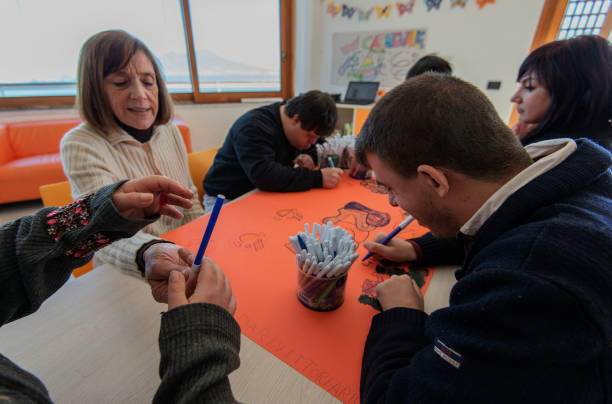
Social work in Italy is a regulated professional activity carried out by Assistenti Sociali (social workers) who are registered with the Ordine Nazionale degli Assistenti Sociali (CNOAS). Social workers operate within a broad ecosystem of services: municipal social services (servizi sociali comunali), regional social-health services, hospitals, schools, prisons, residential care facilities, and non-governmental organizations.
For immigrant professionals interested in working at the intersection of social welfare, healthcare, and cultural mediation, social work in Italy offers a deeply meaningful career path. Italy’s immigrant population — particularly newly arrived refugees and asylum seekers, undocumented migrants, and settled immigrant families facing socioeconomic marginalization — generates enormous demand for social workers with linguistic skills, cultural competence, and an understanding of migration dynamics.
The Role of Social Workers with Immigrant Communities
Social workers in Italy who specialize in (or are assigned to) immigrant and refugee populations perform a wide range of functions. They conduct needs assessments for newly arrived asylum seekers in reception centers, helping to identify medical needs, psychological vulnerabilities, unaccompanied minors, victims of trafficking, and individuals requiring specialized support.
They navigate complex bureaucratic processes on behalf of clients: permit of stay applications (permesso di soggiorno), access to social housing (alloggi popolari), registration with the SSN for healthcare access, enrollment of children in school, access to social benefits (reddito di cittadinanza, etc.), and applications for integration programs.
In community settings, social workers develop and implement social integration projects, connect immigrant families with language courses, vocational training, and employment services, and mediate conflicts between immigrant communities and local institutions. Their work is fundamentally about empowerment: helping individuals and communities build the capacities and connections needed to achieve dignity and self-sufficiency.
Qualifications and Professional Registration
To practice as a social worker in Italy, candidates must hold a three-year Bachelor’s degree in Social Work (Laurea in Servizio Sociale) from an accredited Italian university, followed by a supervised internship and passing the state qualification exam (esame di abilitazione professionale). They must then register with the CNOAS through their regional professional order.
EU citizens with social work qualifications from other European countries can apply for recognition under EU directives, subject to competence assessments. Non-EU professionals must apply for recognition of their foreign qualifications through the Ministry of Labour and Social Policies (Ministero del Lavoro e delle Politiche Sociali). As with other professional qualifications, Italian language proficiency is a prerequisite, and the recognition process can be lengthy.
A Master’s degree in Social Work (Laurea Magistrale in Programmazione e Gestione dei Servizi Educativi e Formativi, or similar) opens pathways to more senior positions, research, and policy work. Continuing professional development is required to maintain registration, with specific credit obligations under the national CPD framework for social workers.
Working Conditions and Salary
Social workers in Italy’s public sector earn approximately €1,400 to €2,000 net per month, depending on experience, seniority, and the specific public body employing them. Private sector and cooperative sector social workers may earn somewhat less, particularly in smaller organizations, though specialized roles in NGOs working on refugee and migration programs can attract competitive salaries, especially when funded by international sources such as EU programs, the Italian Fund for Asylum and Migration (FAMI), or international development agencies.
Workloads in public social services are often heavy, with high caseloads and significant administrative burdens. However, the work offers considerable autonomy, human connection, and the satisfaction of making a real difference in people’s lives. Social workers in immigrant-focused services also benefit from a uniquely stimulating professional environment — multicultural, multilingual, and intellectually demanding.
Multilingualism as a Professional Asset
Italy’s social service system has gradually recognized that social workers who speak the languages of immigrant clients — Arabic, French, Tigrinya, Somali, Romanian, or others — are not merely more effective communicators but provide qualitatively different and higher-quality services. Language access in social work is increasingly seen as a right, not a luxury, and social workers with relevant language skills are sought after by municipalities, cooperatives, and NGOs across the country.
For immigrant professionals entering Italian social work, their linguistic and cultural assets represent a genuine competitive advantage in the job market — particularly in urban areas with large immigrant populations such as Rome, Milan, Turin, Bologna, and Naples. Many municipalities and NGOs explicitly advertise for social workers with specific language competencies when hiring for services directed at particular immigrant communities.
Conclusion
Social work in Italy is a profession at the heart of the struggle for dignity, integration, and justice for vulnerable populations. For immigrant professionals who combine formal social work qualifications with lived experience of migration and multilingual communication, it offers both professional fulfillment and a powerful platform for community impact. The demand for culturally competent social workers in Italy is substantial and growing, making this a career with both social meaning and strong employment prospects.



Leave a Reply