
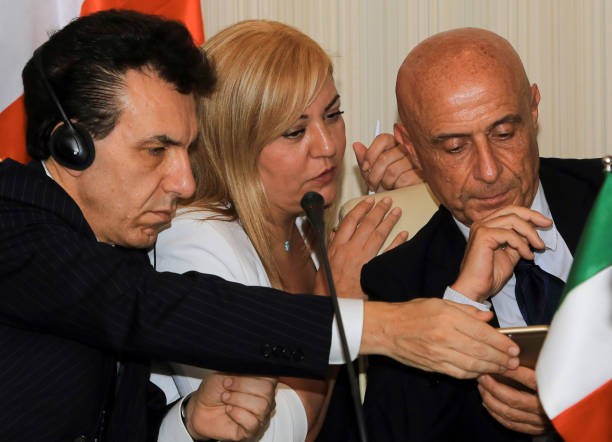
Italy is home to a significant number of international institutions, diplomatic missions, United Nations bodies, and major multinational organizations. Rome hosts the headquarters of the Food and Agriculture Organization (FAO), the International Fund for Agricultural Development (IFAD), and the World Food Programme (WFP), making it one of the most important UN cities in the world. Milan serves as a global hub for finance, fashion, and business, while Geneva-Italy connections keep Italian interpreters in demand for international conferences.
For conference and diplomatic interpreters, Italy offers an exciting, intellectually stimulating career working with world leaders, diplomats, scientists, economists, and business executives. Simultaneous interpretation — rendering a speaker’s words into another language in real time, typically from a soundproofed booth — is the core skill of this profession and one of the most demanding communication tasks any human can perform.
Types of Conference Interpreting Settings in Italy
Conference interpreters in Italy work across a diverse range of settings. At the international level, they serve UN agencies in Rome (FAO, IFAD, WFP), NATO, the G7, and G20 meetings, European Union events (including those rotating through Italian cities under EU presidencies), diplomatic summits, and bilateral government meetings.
At the national level, conference interpreters work for the Italian Parliament, government ministries, regulatory agencies, and courts. In the corporate sector, they serve multinational corporations, law firms, investment banks, and international media organizations operating in Italy. Academic and scientific conferences held in Italian universities and research centers also regularly require professional interpreters.
Italy’s rich diplomatic tradition and its central position in both EU affairs and Mediterranean geopolitics make it a particularly active market for conference and diplomatic interpretation in languages including English, French, German, Spanish, Arabic, Russian, and Chinese.
Qualifications and Training
The path to becoming a conference interpreter in Italy typically involves completing a university degree in languages or a related field, followed by a specialized Master’s degree in Conference Interpreting. Italy has several prestigious interpreting schools: the Scuola Superiore di Lingue Moderne per Interpreti e Traduttori (SSLMIT) at the University of Bologna (Forlì campus), the Istituto Superiore per Interpreti e Traduttori (ISIT) in Rome, the SSLMIT of the University of Trieste, and interpreting programs at La Sapienza (Rome) and other major universities.
These programs typically offer training in simultaneous interpretation (SI), consecutive interpretation (CI), and whispered interpretation (chuchotage). Students work in language combinations — a main active language (A language, typically native), one or two passive languages (B and C languages), and practice interpreting between them.
Admission to professional conference interpreting associations — particularly AIIC (Association Internationale des Interprètes de Conférence) — requires documented experience, peer referrals, and high standards of professional conduct. AIIC membership is widely regarded as the gold standard of professional conference interpreting worldwide.
Multilingual Skills and Less Common Languages
While English, French, Spanish, German, Arabic, Russian, and Chinese are the working languages of most international organizations in Italy, there is also demand for interpreters in less commonly taught languages (LCTLs) for bilateral meetings, diplomatic events, and specialized conferences.
Interpreters who combine a major language (e.g., English or French) with a less common language (e.g., Amharic, Swahili, Tigrinya, Hausa, Persian, or Bengali) may find specialized niches within government, NGO, and international organization settings. While the market for these combinations is narrower, the competition is also lower and the rates — driven by scarcity — can be quite competitive.
For immigrant professionals who grew up bilingual or multilingual in a major and lesser-used language combination, conference interpreting represents an opportunity to leverage a rare linguistic asset in a prestigious, well-compensated professional context.
Earnings and Working Life
Conference interpreters in Italy — particularly those working for international organizations and large corporations — earn among the highest rates in the interpreting profession. Day rates for freelance conference interpreters working on institutional markets typically range from €400 to €700 per day, depending on the language combination, event type, and client organization. UN and EU interpretation assignments follow specific standardized rate scales and are among the most prestigious and stable assignments available.
The working life of a conference interpreter involves travel, variety, and intellectual stimulation — but also significant preparation time, cognitive demands, and the stress of delivering high-stakes communication in real time. Interpreters typically work in pairs or teams for simultaneous interpretation, alternating every 20–30 minutes to maintain cognitive accuracy and reduce fatigue.
Conclusion
Conference and diplomatic interpreting in Italy represents the apex of the interpreting profession: demanding, prestigious, well-compensated, and intellectually extraordinary. For multilingual professionals with exceptional language skills, rigorous training, and the ability to perform under pressure, it offers a career that operates at the heart of global dialogue and international cooperation. Italy’s unique position as a UN host country and European diplomatic hub makes it a particularly vibrant and opportunity-rich environment for this elite profession.




Leave a Reply